REVIEW · BEAULIEU SUR MER
Villa Kerylos Entry Ticket
Book on GetYourGuide →Operated by GetYourGuide Tours & Tickets GmbH · Bookable on GetYourGuide
A Greek villa on the French Riviera sounds unreal. Villa Kérylos really is a one-of-a-kind monument: a Mediterranean home designed in the spirit of ancient Greece, set between Nice and Monaco, in Beaulieu-sur-Mer.
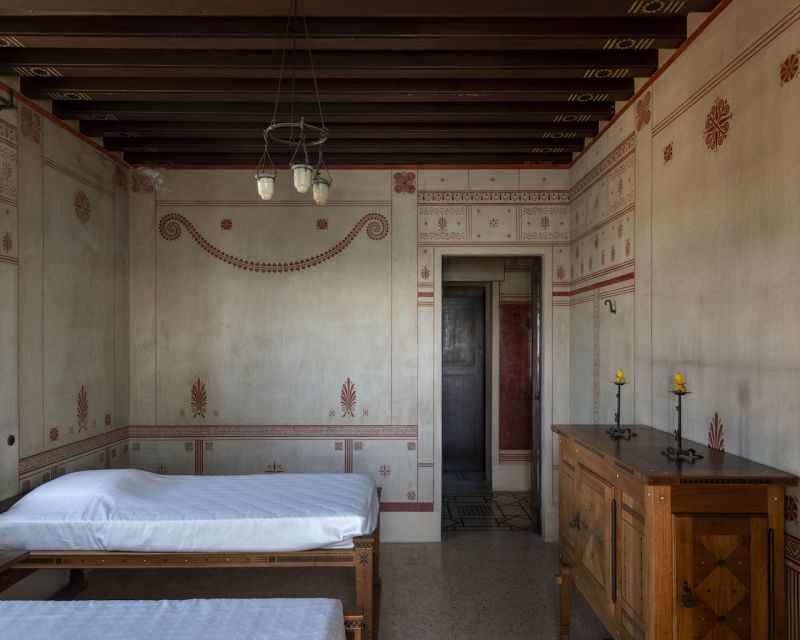
What I love most is the attention to total design. This wasn’t just a building with fancy rooms—everything was conceived together, from furniture and textiles to door details, switches and outlets, and even crockery and cutlery.
My other big draw is the way the site mixes ancient inspiration with early-20th-century comfort. You get concealed modern tech of the time (like heating), hidden so the villa still feels like a serious interpretation of antiquity. A possible drawback: the experience can feel pricey for what you can physically access—like the balcony area, which may not be reachable during every visit.
In This Review
- Key things to know before you go
- Villa Kérylos: Greek antiquity, reimagined between Nice and Monaco
- Why Theodore Reinach and Emmanuel Pontremoli matter here
- Your visit flow: what to do once you’re inside
- The interior that feels designed, not staged
- Hidden comfort: heating, electricity, and the tech you don’t see
- Sea views, courtyards, and how the outside changes the inside
- Exhibition time: when The Gold of Time is part of the day
- Price and value: is $15 fair for what you get?
- Practical side: what’s allowed, what’s not, and timing tips
- Accessibility and stairs: what to expect on the route
- Who this experience suits (and who may prefer something else)
- Should you book Villa Kérylos entry?
- FAQ
- How long is the Villa Kérylos entry ticket valid?
- What’s included with the ticket?
- What items are not allowed inside?
- Is there luggage storage at the site?
- When is the last time I can enter?
- Are there free entry options?
Key things to know before you go
- Greek mythology behind the name: Kérylos refers to Alcyon, a winter-bird tied to a happy omen.
- Built on purpose, not copied: created between 1902 and 1908, inspired by Mediterranean antiquity rather than reconstructed as a direct replica.
- Everything was designed: handles, electrical outlets, textiles, tableware—no throwaway details.
- Technology is concealed: switches and outlets are hidden but still accessible, and heating works without visible radiators.
- Plan for an optional exhibition: on some visits you may find a show like The Gold of Time by Gabriel Léger.
- Know the access limits: balcony access may be restricted, so don’t count on every viewpoint being available.
Villa Kérylos: Greek antiquity, reimagined between Nice and Monaco
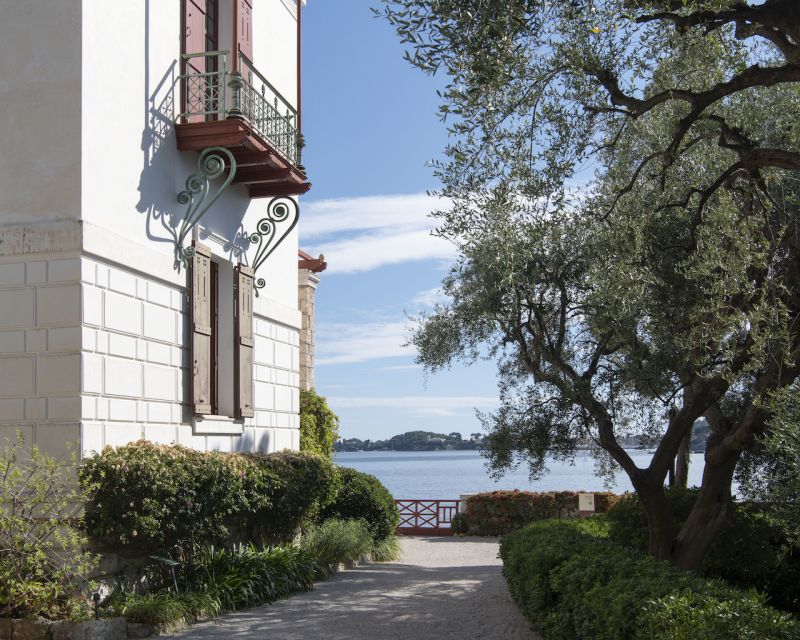
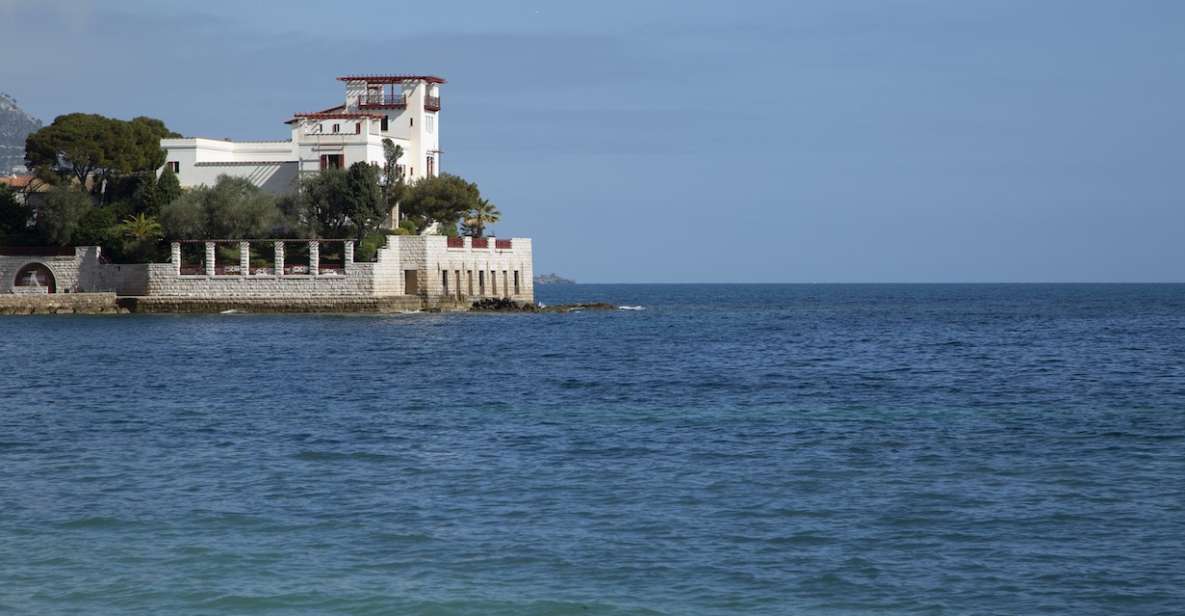
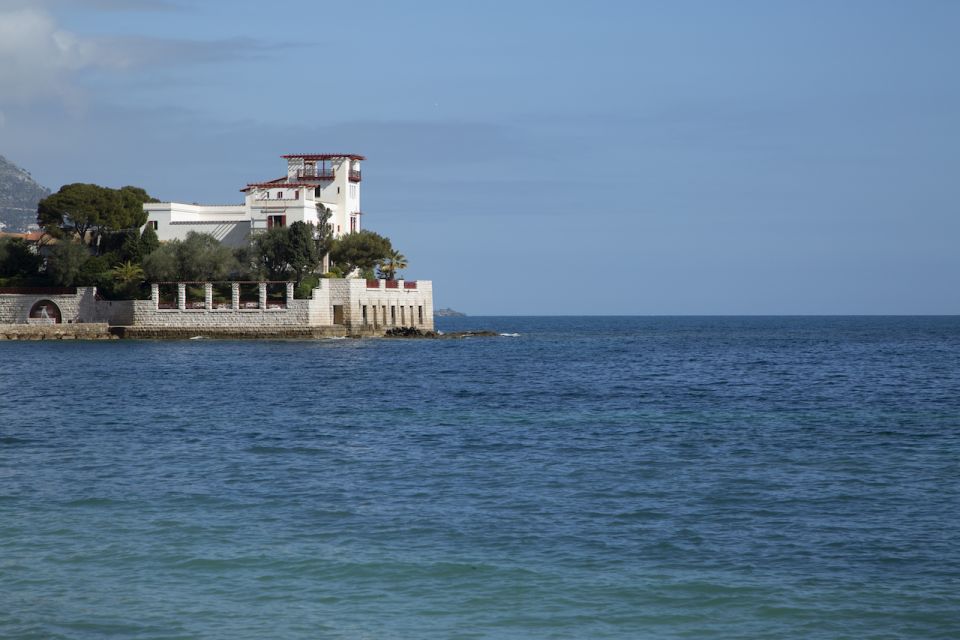
Villa Kérylos sits on the Riviera shore, in Beaulieu-sur-Mer, between the big-name magnets of Nice and Monaco. It’s not trying to look like a random Greek ruin; it’s trying to feel like a Greek home—luxurious, lived-in, and carefully made.
The name connects to Greek myth. Kérylos refers to Alcyon, a sea-bird (often described as a type of swallow) said to nest in winter. In story terms, it’s linked to a happy omen—an odd but charming match for a villa built to make the ancient world feel present.
What you’ll notice fast is the villa’s seriousness. This is architecture as a whole-world project: a setting where the house, the objects, the finishes, and even the practical parts all belong to the same idea of antiquity.
You can also read our reviews of more tours and experiences in Beaulieu Sur Mer.



Why Theodore Reinach and Emmanuel Pontremoli matter here
The villa didn’t happen by accident. It was driven by the scholar Théodore Reinach, supported by the architect Emmanuel Pontremoli. They met around the Salon of 1900, and Pontremoli brought research influences tied to ancient sites and collections.
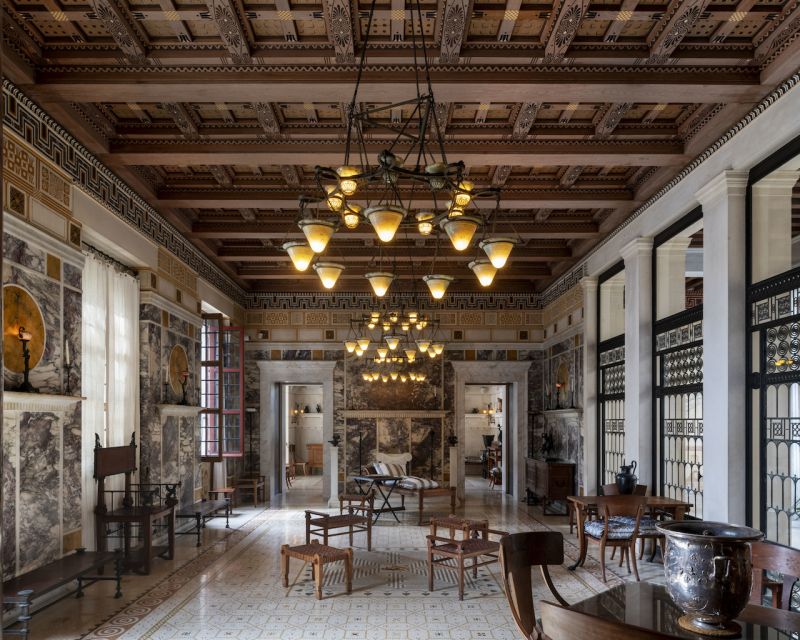
Construction ran from 1902 to 1908, with top craftsmen and artists. That detail matters because it explains the feel of the place: you’re not walking through a theme park set dressing. You’re walking through an early-20th-century attempt to create a convincing atmosphere based on Mediterranean antiquity.
If you like places where the “how” matters as much as the “what,” you’ll probably get pulled in here. The villa is basically a research-style creation—inspired by ancient Greek and broader Mediterranean worlds, but presented as a reinvention from the dawn of the 20th century.
Your visit flow: what to do once you’re inside
Because this is an entry ticket (not a guided group itinerary with scheduled stops), your best plan is simple: move steadily, then slow down where objects and materials are doing their job.
Start with the overall orientation of the villa. Look for the big idea first: the rooms are meant to feel arranged like a Greek luxury home, not like an empty museum box. Then shift your attention to the “small things” that actually make the rooms believable—handles, outlets, hardware, the designed surfaces.
As you go room to room, your focus should shift from wall-to-wall decoration to the integration of everything. Villa Kérylos is built to make you feel the objects belong to the space. That’s why the site keeps stressing that nothing is an afterthought: furniture, textiles, and table settings were part of the original concept.
If an exhibition is running during your date, treat it like bonus context rather than a distraction. One exhibition called The Gold of Time by Gabriel Léger was created specifically for Villa Kérylos, and it can help you see how the villa continues to connect antiquity to later art.
The interior that feels designed, not staged
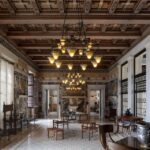
This villa’s interior is where the experience makes its case. You’re looking at Greek-inspired forms and decorative references, but the power of the place comes from how consistent everything is.
One of the most praised aspects is how the rooms feel preserved and well kept. You’re not battling clutter or chasing a “whatever is on the walls” vibe. Instead, the spaces feel like they were built to be lived in—then frozen for you to study.
You’ll also benefit from taking time with the interpretive help. The site has audio guide explanations, and that matters because Villa Kérylos is full of details that you might otherwise miss. If you like architecture and object design, use the audio to connect the dots between myth, style, and the practical choices that shape each room.
Hidden comfort: heating, electricity, and the tech you don’t see
The villa’s practical systems are part of the magic. It’s described as a monument with the comforts of its time, but they’re carefully concealed so the look stays antique-inspired.
Two details are especially worth noticing:
- There are electrical outlets and switches, but they’re hidden in a way that tries to keep the visual world “ancient.”
- Heating is done through an ingenious system inspired by antiquity—ducts diffusing hot air powered by oil boilers—so you don’t see radiators.
This is a smart lesson in how design choices change how we experience a space. If you walk in thinking it’s only about looks, you’ll miss the real craftsmanship problem the creators solved: how to make an old-world fantasy work in a real building.





Sea views, courtyards, and how the outside changes the inside
The villa is tied to the Mediterranean setting, and that’s not just poetic. The location gives it a sense of openness and light, and the views play into how the villa reads as a “coastal home.”
You should plan to spend time outside too. Even if you’re primarily here for the Greek-inspired interior, the garden and outdoor zones help you understand the villa’s mood—sea air, shoreline geography, and the way outdoor light bounces into rooms.
One access note matters: the balcony area may not always be reachable. In at least one visit experience, access to the balcony for the best distant view wasn’t possible. So if balcony views are the main reason you booked, keep your expectations flexible.
Exhibition time: when The Gold of Time is part of the day
On certain dates, Villa Kérylos may include an exhibition. A highlight in the published feedback is The Gold of Time, featuring works by Gabriel Léger, made specifically for the villa.
If that exhibition is on during your visit, it’s worth adjusting your route slightly. Spend enough time to connect the art to the setting—this villa isn’t just a container, and site-specific works tend to land differently when you experience them in the environment they were made for.
If there’s no special exhibit that day, don’t worry. The core experience still works because the building itself is the main object of attention.
Price and value: is $15 fair for what you get?
The ticket price is listed at $15 per person. That’s not a budget bargain, especially if you’re expecting a long, structured tour with lots of stops.
Still, value here isn’t about time. It’s about the density of design. This is a rare site where the creators aimed to design the villa as a complete system: architecture plus objects plus hidden comfort. If you genuinely enjoy craftsmanship, architecture, and designed interiors, $15 can feel like a fair price for a one-of-a-kind environment.
If you’re more of a hit-and-run sightseeing person, you may feel the price more sharply. One comment even points out the idea that around €/$13 felt like a lot. My practical take: go if you want to slow down and read the details; don’t go if you only want a quick photo stop.
Practical side: what’s allowed, what’s not, and timing tips
Plan for a smooth visit by knowing the rules and the limits.
What’s not allowed:
- Baby strollers
- Pets
- Food
- Touching plants
Also note:
- There’s no luggage storage, so travel light.
- Opening hours can vary, so check ahead.
- The last entry is 30 minutes before closing time, so don’t roll in late and hope for the best.
The villa is closed on Jan 1, May 1, Nov 11, and Dec 25. If you’re traveling around those dates, pick your timing carefully.
If you’re sensitive to comfort while walking: the route includes rest seats, and the exteriors are covered with gravel. That gravel matters for how your feet feel, especially in summer heat or cooler windy coastal days.
Accessibility and stairs: what to expect on the route
Accessibility details are important here because the villa includes stairs and outdoor surfaces.
- The exterior areas are covered with gravel.
- The ticket office has access to the ground floor via a reserved entrance with a ramp.
- The ground floor is accessible on one level.
- Reaching the first floor requires a staircase with handrails: 8 steps, landing, 12 steps, landing, then 9 steps.
- The tour route has rest seats, and there are 6 steps to reach the garden.
- There are no strips for visually impaired visitors (so navigation aids may be limited).
If you need step-free access, the ground floor is likely your best bet. If you want first-floor views, build time for stair navigation.
Who this experience suits (and who may prefer something else)
Villa Kérylos is a great match for you if you:
- like architecture and designed objects (not just rooms with good photos)
- enjoy cultural backstories like the Reinach–Pontremoli idea behind the project
- want a quieter, more thoughtful stop on the Riviera than the usual checklist sights
- appreciate places that mix scholarship with craft
You might feel less satisfied if you:
- want a long, guided day with lots of scheduled movement
- only care about one big viewpoint and don’t want to spend time inside
- need guaranteed access to every outdoor viewing point (like the balcony area)
It’s also a good stop to pair with Riviera coastline time. The villa works as a “thinking break” between beach stretches and city wandering.
Should you book Villa Kérylos entry?
Book this entry ticket if you want something unusual on the French Riviera: a Greek-inspired masterpiece where the details were designed as one coherent world, including hidden comfort features that help it function as a real building. At $15, the value is strongest when you’ll actually enjoy reading the space—room by room, object by object.
Skip it or reconsider if you’re only looking for a quick peek, because the experience is more about careful attention than about a checklist of big sights.
FAQ
How long is the Villa Kérylos entry ticket valid?
It’s valid for 1 day, from the first activation.
What’s included with the ticket?
The ticket includes entrance only.
What items are not allowed inside?
You can’t bring baby strollers, pets, food, and you’re not allowed to touch plants.
Is there luggage storage at the site?
No. There is no luggage storage available.
When is the last time I can enter?
The last entry to the site is 30 minutes before closing time.
Are there free entry options?
Yes. Free entrance can apply on the first Sunday of Jan, Feb, March, Nov, and Dec, during European Heritage Days (3rd weekend of September), for visitors under 18, and for EU citizens under 26 (you must show a photo ID with a picture at the ticket station).