REVIEW · NICE
A Writer’s Guide to Nice: An Audio Tour of the Old Town
Book on Viator →Operated by VoiceMap Audio Tours · Bookable on Viator
Old Nice is best when you can wander.
This self-paced audio walk in Nice’s Vieux Nice area helps you pace your own stops while you hear stories tied to what you’re seeing. I like that it gives you GPS-enabled directions so you’re not stuck guessing where to listen, and you can keep going even if service is spotty thanks to offline access.
Two things I’d highlight right away. First, you can learn about Nice painters such as Raoul Duffy while you’re moving through the streets, not sitting in a museum. Second, the offline maps and audio info mean you’re not constantly dependent on your data plan.
One drawback to plan for: you’ll get the best experience only if you arrive at the exact starting point and keep your phone’s location working. If your app setup email arrives late, that can slow you down before you’re ready to start.
In This Review
- Key reasons this Nice Old Town audio guide works
- A 90-minute stroll through Old Nice with GPS audio
- Price and what you actually get for $9.99
- How to use the VoiceMap app without losing time
- Where the walk starts: Opéra – Vieille Ville (and why exact location matters)
- Into Vieux Nice: the Old Town section sets the tone
- Palais de Justice to Tour de l’Horloge: where timing meets architecture
- Opera de Nice and the street spectacle in between
- Palais de la Préfecture and the chapel sequence that slows you down
- Centre du Patrimoine and the fresco of Adam and Eve
- From Sainte Rita to Saint-Jacques-le-Majeur: churches as landmarks, not just background
- Palais Lascaris and Nice Cathedral: big stops you can enjoy from outside
- Porte Fausse and Place Saint-François: gateways and a square break
- Saint-Martin (Saint-Augustin) and the finish at Tour Saint-François
- What the experience is best at (and where it can fall short)
- Who should book A Writer’s Guide to Nice
- Should you book this Nice Old Town audio tour?
- FAQ
- How long is the Old Town audio tour?
- What language is the narration available in?
- How much does it cost?
- Do I need internet during the walk?
- Does the tour use GPS?
- Where does the tour start and end?
- What do I need to listen?
- Is museum admission included for stops like Palais Lascaris?
- Can I cancel or change my booking?
Key reasons this Nice Old Town audio guide works
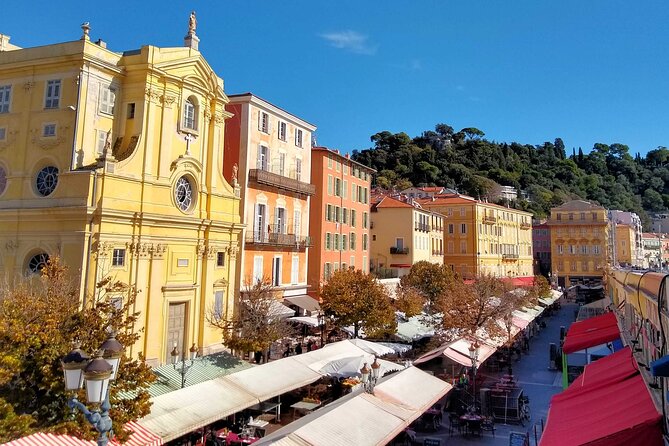
- GPS-enabled directions help you match each audio section to the street location
- Offline access includes maps and audio information, handy in busy Old Town
- English-only narration with lifetime access, so you can repeat it
- You’ll hear about major landmarks like the Tour de l’Horloge and opera house as you pass
- The route layers art, religion, and civic sites, from a fresco of Adam and Eve to multiple churches
- Stops include Palais Lascaris, with commentary while you walk past the museum area
A 90-minute stroll through Old Nice with GPS audio
This is the kind of tour that fits real travel days. You’re not herded into a fixed group rhythm, and you’re not waiting for a guide to catch up. Instead, you walk at your pace and press play at the right moments, with your phone’s GPS doing the matching.
Most segments are designed to work while you move, so it’s smart to walk the streets slowly enough to hear the audio clearly. If you rush, you’ll miss details that the narrator is clearly timing for each spot. The upside is you can stop longer at the moments that grab your attention.
The route sits in Nice’s Old Town area, so it naturally turns into a street-level lesson. You pass by civic buildings, clocks, churches, and palace-like structures, plus a fresco and a couple of chapels. Even if you’ve visited Nice before, this kind of walking audio helps you notice what you might otherwise skim over.
You can also read our reviews of more guided tours in Nice



Price and what you actually get for $9.99
At $9.99 per person, this is priced like a bargain compared to guided tours with a live staff. The big value isn’t only that it’s self-paced. It’s that you get lifetime access to the tour content in English, so you’re not just buying one day of audio.
You also get offline access to maps and audio information. That matters because Old Town days can mean crowded streets and occasional connectivity issues. With offline features, you’re less likely to lose the plot mid-walk.
What you should know on the practical side: the tour doesn’t include your phone or headphones. So before you buy, make sure you’re ready with your own smartphone and a way to listen. If you forget, you’ll be paying extra for the privilege of hearing the stories you came for.
How to use the VoiceMap app without losing time
This experience runs through the VoiceMap app on Android and iOS. The concept is simple: you book online, then you use the app to play audio tied to your location. The tour comes with unlimited use with an app, and you also get offline maps and geodata.
Here’s the one move that saves the most hassle: start by double-checking the app is ready before you step into the Old Town route. One of the frustrations mentioned in real-world use is that the email with loading instructions didn’t arrive right away, and by the time it did, the start moment had already almost slipped away.
So, plan like this:
- Book soon enough that you’re not waiting on an email at the last second.
- Test your audio and GPS before you’re standing at the starting point.
- Turn location services on so the GPS directions can do their job.
If the app doesn’t load properly, the whole experience feels harder, because you can’t rely on the audio matching where you are. Once it’s working, you’ll appreciate how smoothly the audio starts when you reach the right location.
Where the walk starts: Opéra – Vieille Ville (and why exact location matters)
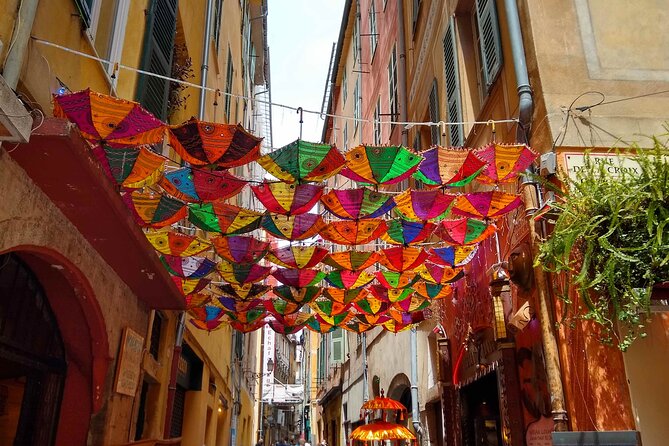
The start point is Opéra – Vieille Ville, 06300 Nice, France. That’s not just an address line. It’s the anchor for the whole tour.
One of the clear lessons from real use is that it can be difficult if you don’t line yourself up with the exact start area. Since this is GPS-driven, being off by a lot can mean the tour doesn’t kick in the way you expect. When you’re ready to begin, take a few seconds to orient yourself and confirm you’re at the right spot on the map.
The tour end is at Tour Saint-François, 2-3 Rle Saint-André, 06300 Nice, France, in front of the tower. That’s helpful for planning your day afterward because you know where the walk finishes and you can keep exploring from there.
Into Vieux Nice: the Old Town section sets the tone
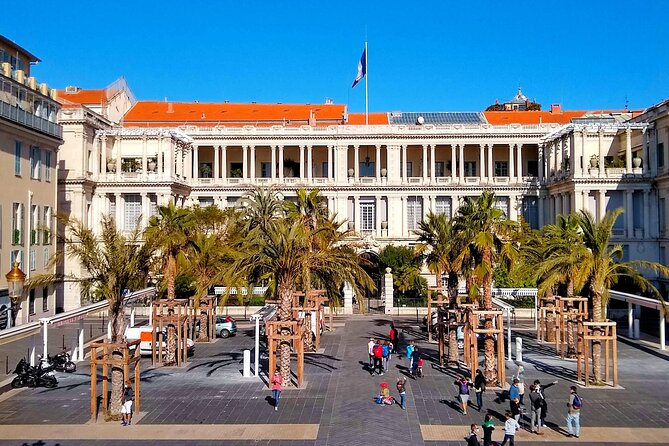
Right away, the tour frames the wider Old Town setting. The early portion is designed to help you get oriented, then pull you forward into the specific landmarks as you walk.
This matters because Old Nice can feel like a beautiful maze. With a self-paced audio tour, you want the first stretch to help you understand the logic of what comes next. Once you hear the setup, the later stops feel less random and more like a story you’re walking through.
If you like discovering cities at your own pace, this opening phase is ideal. You’re not “late” if you stop for photos or coffee. You’re just moving forward as you go.
You can also read our reviews of more tours and experiences in Nice



Palais de Justice to Tour de l’Horloge: where timing meets architecture
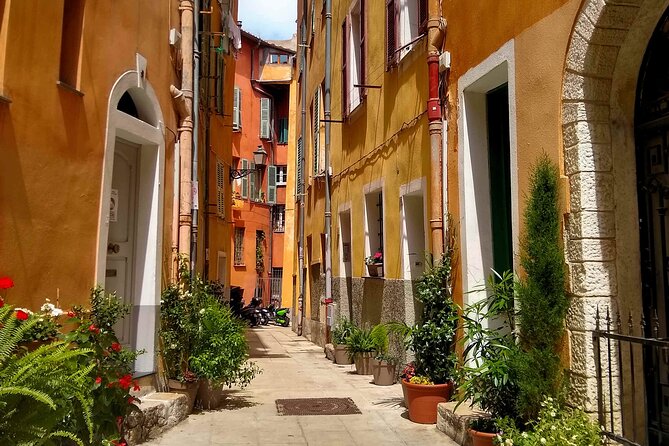
A key part of the route is walking past the Palais de Justice. You’ll hear about it while you’re on the move, which makes this stop work even if you don’t want to go inside anywhere.
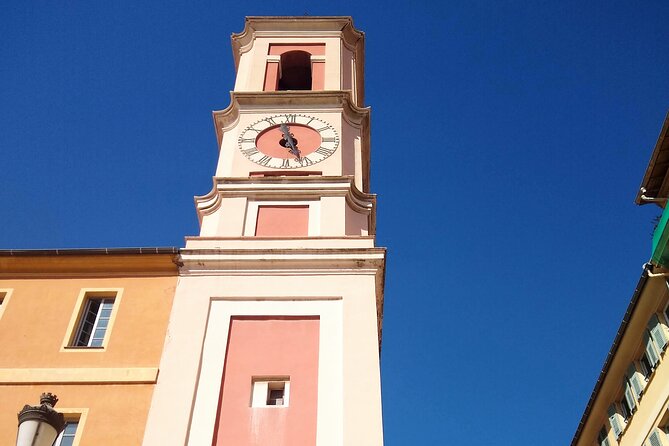
Next comes the Tour de l’Horloge, the clock tower stop. This is the kind of location that naturally gives you reference points in Old Town: you can look up, check your bearings, then let the audio explain what you’re seeing.
Why I like this section for planning: you’re getting two big civic-style moments back-to-back. That helps you understand how Nice’s old streets blend everyday landmarks with major public spaces. It also gives you a mental rhythm for the rest of the route.
Opera de Nice and the street spectacle in between
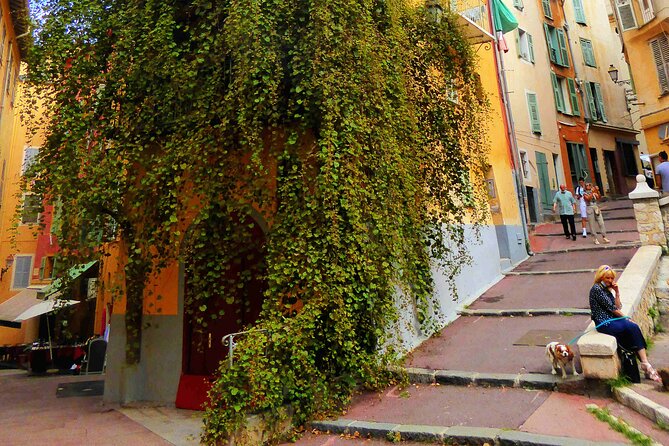
Passing the Opera de Nice keeps the tour moving through a different vibe than courts and clocks. Opera houses tend to change the feel of a street, even if you’re only seeing the exterior. Here, you’ll hear about the theatre as you walk by.
This is a good example of how the tour uses variety. Instead of repeating the same type of content, the audio shifts themes as your route shifts locations. That makes the walk less tiring, because your brain isn’t stuck on one kind of landmark.
If you’re a fan of places that have a role in public life, this section is especially satisfying. Even without entering any venue, you get context while you move.
Palais de la Préfecture and the chapel sequence that slows you down
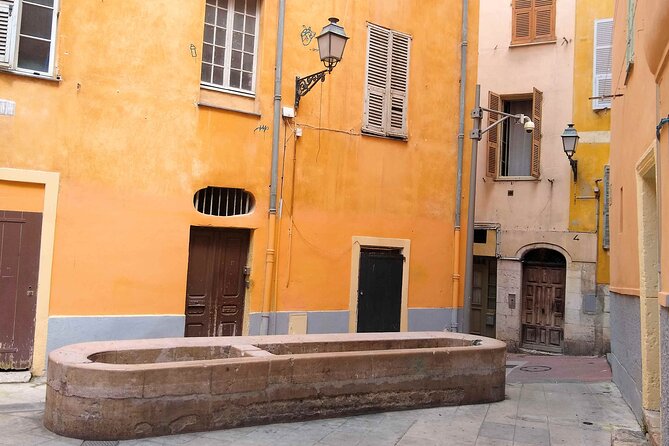
The route continues with the Palais de la Préfecture, then moves to two chapels: Chapelle de la Miséricorde and Chapelle du Saint-Suaire. These are the kinds of stops that tend to reward a slower pace, because chapels often feel more intimate than streetscapes.
In an audio format, the benefit is you can pause your pace without feeling like you’re interrupting anyone. If you want to stand and listen, you can. If you want to keep walking while you listen, that can work too.
The drawback here is simple: if you pass too quickly, you’ll hear bits but not fully absorb them. With chapels, you often want a moment to look around. If you’re traveling with someone who hates pauses, tell them in advance this part can take longer than expected, because listening is best when you can actually read what’s around you.
Centre du Patrimoine and the fresco of Adam and Eve
The tour passes by the Centre du Patrimoine and then a fresco of Adam and Eve. This combination is interesting because it links education-focused space with visual art you can spot as you walk.
Even if you don’t go into anything, the audio helps you connect what you’re seeing with why it matters. That’s the trick with any street-level cultural audio: the best tours teach you how to look, not just where to stand.
This is also where the review’s note about art names really starts to make sense. The tour doesn’t only talk about buildings. It brings in the creative side of Nice, including painters like Raoul Duffy, and that helps the route feel less like a list of stops and more like a guided way of noticing.
From Sainte Rita to Saint-Jacques-le-Majeur: churches as landmarks, not just background
Next you’ll pass the Église Sainte Rita, then Église Saint-Jacques-le-Majeur de Nice. That’s a stretch of the route where the audio likely frames these churches in relation to the streets around them.
I find church stops work well on an audio tour because they’re visually distinct and they give you natural pauses. Even if you don’t step inside, you can slow down, look at the façade, and let the narration fill in the context.
One practical thought: Old Town sidewalks can get tight. If you’re listening with audio loud enough to catch every word, you might want to step slightly aside when you feel a crowd pressing behind you. It keeps the experience enjoyable and prevents the kind of stress that kills good listening.
Palais Lascaris and Nice Cathedral: big stops you can enjoy from outside
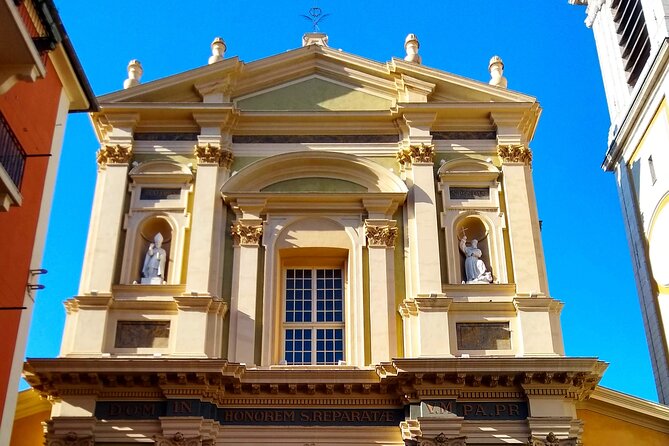
As you move along, you’ll pass Palais Lascaris, then the Nice Cathedral. In the listing, Palais Lascaris is positioned as a museum-related stop, and the tour gives you commentary while you walk past it.
This section is good for travelers who want cultural depth but don’t want to build a ticket-and-line schedule into their day. You get the idea and the talking points through audio, without committing to entrances you may or may not have time for.
The tradeoff is that you’re getting the story mainly from the outside perspective. If you love going inside whenever possible, you’ll likely want to pair this audio walk with at least one additional stop where you can explore on your own. The audio here still helps you appreciate what you’re seeing, though.
Porte Fausse and Place Saint-François: gateways and a square break
The route then moves to Porte Fausse, followed by Place Saint-Francois. Gates and squares tend to function as natural breathing points in a walking day. They also help you recalibrate your route visually.
An audio tour can sometimes feel like you’re only thinking about the next button press. These stops interrupt that loop. They’re places where you can step back, look at the street geometry, and let the audio sink in.
If you like street photography, this is also a good chunk to take a few pauses. The tour’s design makes it easy to stop and listen, then move again when you’re ready.
Saint-Martin (Saint-Augustin) and the finish at Tour Saint-François
The final church stop is Eglise Saint-Martin dite Saint-Augustin, and then the walk ends in front of Tour Saint-François. Finishing with a tower is a nice payoff because you end with a clear focal point.
As a practical matter, a known endpoint helps you plan the rest of your afternoon. Instead of wondering where your “tour time” will dump you, you know you’ll finish at a specific spot in the Old Town area.
If you’re the type who likes to keep walking after structured time, this ending works well. You can transition from audio mode to “wander mode” without having to decode where you are.
What the experience is best at (and where it can fall short)
This audio walk shines when you want a low-stress plan. You can follow along in English, get GPS support, and still keep your day flexible. It’s also a strong value because you get lifetime access, plus offline support.
Where it can fall short is mostly technical and timing-related. If your app setup runs into issues, you might end up spending time troubleshooting instead of sightseeing. And because the tour relies on matching location, you need to be near the correct spots for the audio to trigger the way you expect.
In short: this is a smart choice for independent walkers who enjoy learning while they go. It’s less ideal if you hate app-based travel, or if you’ll be traveling with unreliable phone battery and no backup plan.
Who should book A Writer’s Guide to Nice
I think this works best for you if:
- You want an Old Town walking plan without a fixed group schedule
- You like learning through street-level context, including art references like Raoul Duffy
- You prefer audio you can replay later because you have lifetime access
- You’re traveling with a phone you’re comfortable using for GPS
It might be less ideal if you need frequent hands-on, face-to-face interaction. This is still a human story, just delivered through an app. You’ll control the pacing entirely.
Also, since it’s private for your group, it’s a good option if you want something shared in a calm way, rather than competing with other people’s schedules.
Should you book this Nice Old Town audio tour?
Yes, I’d book it if you want a simple, affordable way to turn Old Town into a guided walk you control. At $9.99, the price feels right for what you get: English audio, GPS guidance, and offline maps, with unlimited replays.
But be honest with yourself about one thing: you’ll enjoy it more if your phone setup goes smoothly. Before you head out, make sure you can load the VoiceMap content and verify that GPS is on. If you’re the kind of traveler who arrives at attractions and then fights technology, this can turn into a frustrating start.
If you’re prepared, it’s an easy win: you’ll walk Nice’s Old Town landmarks in a logical order, hear commentary as you pass each stop, and come away seeing the streets with fresh context.
FAQ
How long is the Old Town audio tour?
The duration is listed as about 1 hour to 1 hour 15 minutes.
What language is the narration available in?
The tour is offered in English.
How much does it cost?
It costs $9.99 per person.
Do I need internet during the walk?
You get offline access to audio, maps, and geodata, which is meant to help even when you don’t have a strong connection.
Does the tour use GPS?
Yes. The app includes GPS-enabled directions to help you follow along without getting lost.
Where does the tour start and end?
It starts at Opéra – Vieille Ville, 06300 Nice, France, and ends in front of Tour Saint-François at 2-3 Rle Saint-André, 06300 Nice, France.
What do I need to listen?
You’ll need your smartphone and headphones. Those aren’t included.
Is museum admission included for stops like Palais Lascaris?
No. Tickets or entrance fees to museums or attractions along the route are not included.
Can I cancel or change my booking?
This experience is non-refundable and cannot be changed for any reason.