REVIEW · NICE
Villages Médiévaux,Grasse, Gourdon, Tourrettes sur Loup, St Paul
Book on Viator →Bookable on Viator
A medieval villages day trip with perfume included. You get a smooth 8-hour loop from Nice that trades public-transport hassle for classic hilltown walking time and a real look at how Côte d’Azur culture developed. I especially liked pairing Grasse’s perfume history with three stone villages perched high above the coast.
The best part is the way the day mixes guided context with freedom to wander at your own pace. You’ll have time to explore old streets, ramparts, chapels, and squares without feeling like you’re sprinting. One drawback to plan for: you’ll be on winding mountain roads for part of the day, and if you get motion-sick easily, you’ll want to be prepared.
In This Review
- Key Things I’d Watch for Before You Go
- Why This Nice Day Trip Feels Like the Good Part of the Rivierа
- Grasse’s Old Town and the GALIMARD Perfume Factory
- Gourdon, the Eagle’s Nest Village With Ramparts and Views
- Tourrettes-sur-Loup: Violet Farms, Rampart Houses, and Creative Workshops
- St-Paul-de-Vence: Medieval Squares, Church Stops, and a Chagall Thread
- Drive Time, Group Size, and What to Expect When You Sit in the Van
- What You Actually Pay For at $108.61
- Where Breaks and Small Practicalities Matter
- Should You Book This Medieval Villages and Perfume Tour?
- FAQ
- What time does the tour start, and how long is it?
- Where are pick-ups and drop-offs done?
- What’s included in the price?
- Is lunch or drinks included?
- Is the tour offered in English?
- What should I bring for the villages?
Key Things I’d Watch for Before You Go

- Small group size (max 8) keeps the day feeling personal, not crowded.
- Grasse + GALIMARD adds a hands-on, story-rich stop beyond the villages.
- Gourdon’s Eagle’s Nest views give you that Riviera-to-valley perspective.
- Tourrettes-sur-Loup focuses on violets, old ramparts, and crafts in a walkable core.
- St-Paul-de-Vence brings the medieval square life plus the Chagall connection.
- Timing is structured but not rigid: you’ll get guided explanations, then walk time.
Why This Nice Day Trip Feels Like the Good Part of the Rivierа
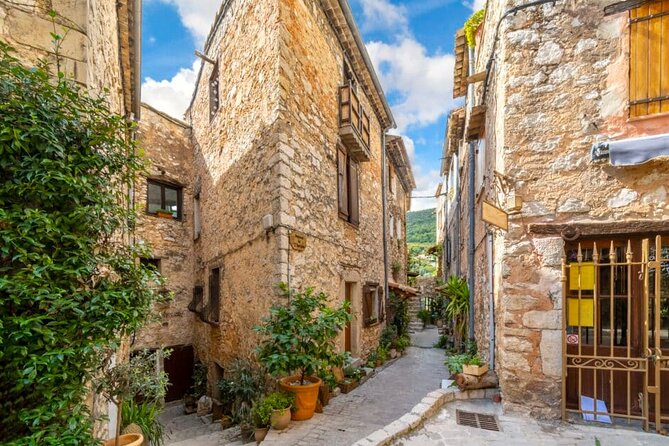
This tour is built for one thing: seeing the interior hill villages without losing hours to buses and transfers. Starting at 9:00am and running about 8 hours, it hits multiple eras in one day—medieval defenses, church art, and the perfume industry that made Grasse famous worldwide.
What makes it work is the balance. You’re not just dropped off and left to figure it out. You get guided storytelling and orientation, then time to stroll the lanes, pause for photos, and pick your own lunch rhythm.
You can also read our reviews of more tours and experiences in Nice.



Grasse’s Old Town and the GALIMARD Perfume Factory
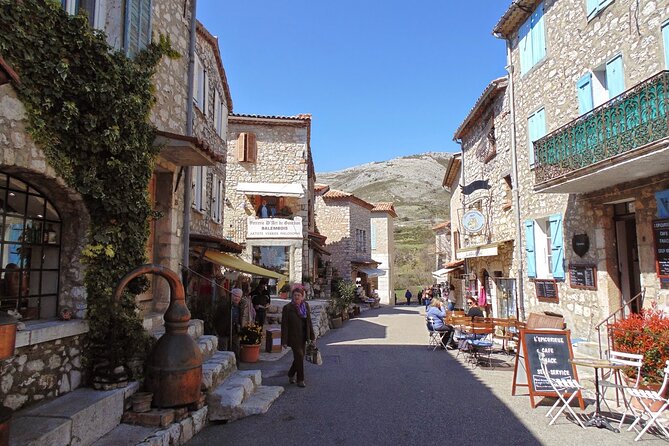
Grasse is your first stop, and it’s not a random detour. It’s tied to perfume so strongly that it’s often called the world capital of perfume, and the craft tradition is even recognized by UNESCO as an intangible heritage of humanity since 2018.
At GALIMARD, you’ll see how perfume moves from plant materials to finished products—guided by someone on-site (there’s a colleague who takes you through the factory tour). The messaging here is practical: you’ll learn how the industry developed, from the arrival of wild flowers to bottling, cosmetics, and essences.
Then it’s back to the medieval layers. You’ll walk through the old town streets and see reminders of older defenses, including the Saracen Tower, once used as a strategic point against attackers. If you like church interiors, plan for Notre Dame du Puy, a Romanesque-style cathedral built in the 12th century. The bell tower is 34 meters high, and the interior is decorated with paintings associated with Rubens.
A small but important detail: this is a long first stop—listed as 2 hours 30 minutes—so you can comfortably do both the perfume visit and a relaxed wander rather than feeling rushed.
Gourdon, the Eagle’s Nest Village With Ramparts and Views
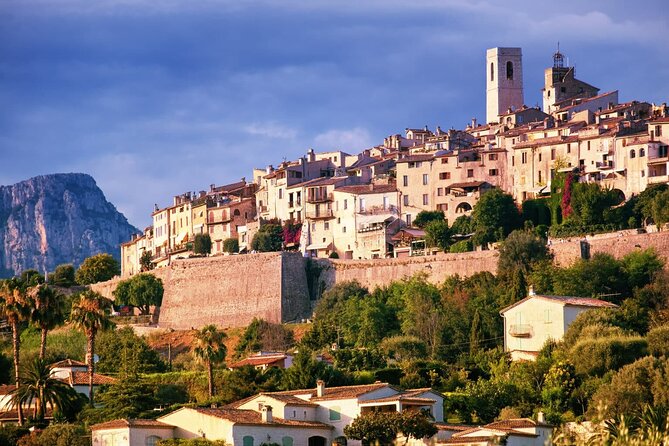
After Grasse, you head to Gourdon, often described as one of France’s most beautiful medieval villages, perched at about 750 meters. The nickname is Eagle’s Nest, and you’ll understand why once you’re at the viewpoint—Gourdon overlooks the Loup valley and stretches your sightlines toward the Riviera.
What I like most about Gourdon is the defense story you can actually see. You’ll explore ramparts and the medieval castle built by the Saracens, a site that often served as a stronghold. The town layout makes the fortifications feel like part of daily life, not a museum set.
You’ll also get a good dose of “slow walking value” here: narrow stone streets, old houses, and craft-style corners where it feels natural to linger. Don’t skip Victoria Square, where you can enjoy that wide panorama all the way to the coast.
There are also religious and garden details that help Gourdon feel layered. You can visit the Romanesque Saint Pons chapel (12th century), restored with a medieval garden, and the Saint Vincent church (12th century), listed in the historic monuments inventory.
Time-wise, this stop is listed as 1 hour 30 minutes. That’s enough for viewpoints and a proper loop through the main streets without turning the day into an endurance event.
Tourrettes-sur-Loup: Violet Farms, Rampart Houses, and Creative Workshops
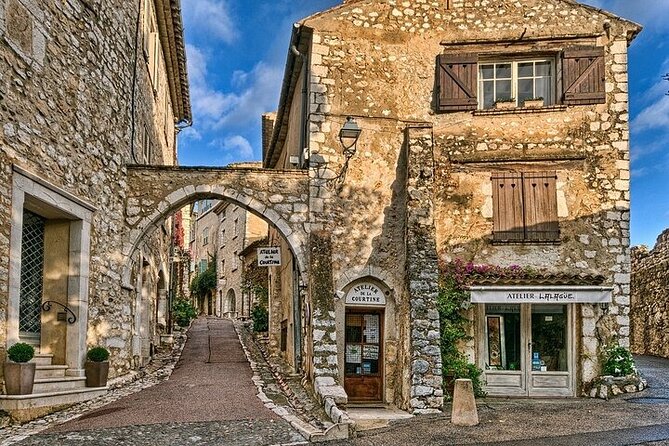
Next is Tourrettes-sur-Loup, on the way to the Gorges du Loup. This village has that classic hillside feel—an old settlement on a rocky spur with a view over the Mediterranean. The two big local crops you’ll hear about are violets and olives, and the village identity is built around that.
During your visit, focus on the fortification details at street level. You can admire rampart houses and the town hall area, which was formerly a keep. The stonework matters here. Look for vaulted passages and restored facades; the charm isn’t just in the scenery, it’s in the way the village is stitched together.
The tour also puts you near the human side of the place. There’s a Bastide and a museum dedicated to violets, plus a strong creative thread: around 30 workshops and galleries run by artists and craftsmen, with work ranging from paintings and jewelry to weaving and pottery. This is a place where browsing feels like part of the sightseeing, not an obligation.
This stop is listed at 1 hour 30 minutes too, which works well. You get enough time to see the highlights and still stop for something simple—like a snack or a cool drink—before the longer push into St-Paul-de-Vence.
St-Paul-de-Vence: Medieval Squares, Church Stops, and a Chagall Thread
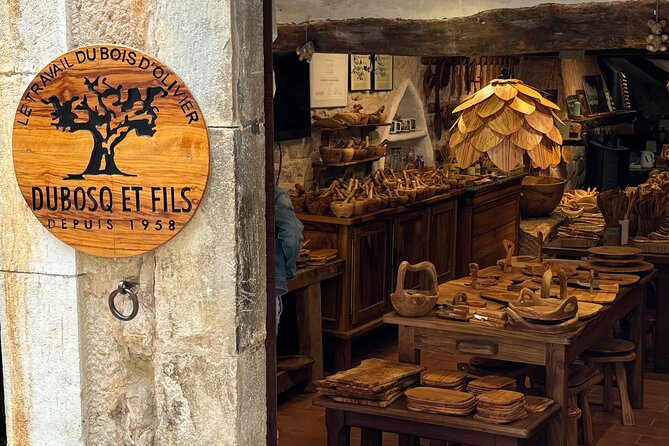
St-Paul-de-Vence is your final village stop, and it’s one of the most visited medieval villages on the Côte d’Azur. The vibe is easy: pedestrian streets, fountain corners, workshops, artists, and a steady rhythm of cafés and small shops.
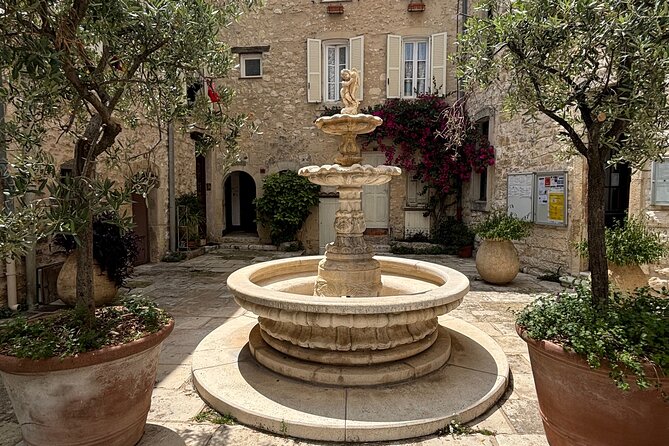
Your walking route includes the village’s key history and heritage points. You’ll explore sights like the collegiate church, the Notre Dame des Gardettes Chapel, Place de la Grande Fontaine, the Donjon, and an oil mill. You’ll also see panels that explain the story of the place as you go—handy if you want facts without having to chase them.
One cultural bonus here is the arts connection beyond the village itself. Marc Chagall lived in St-Paul-de-Vence, and you can see his grave. Even if Chagall isn’t your thing, it adds a thread of modern art history to an old stone setting.
Then there’s the simple pleasure of French daily life. The tour recommends taking a moment at Place du jeu de boules, the kind of square where locals and visitors mingle and the game keeps rolling. If you’re interested in who has passed through, you’ll even hear names tied to the arts world, including Lino Ventura and Yves Montand.
This stop is listed as 2 hours 30 minutes, giving you the longest stretch of free-walk time of the day. It’s also where you’ll probably feel the day shift from “checkpoints” to “wandering.”



Drive Time, Group Size, and What to Expect When You Sit in the Van
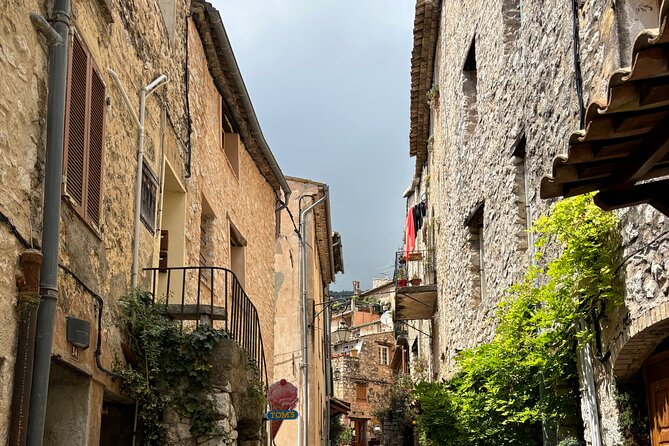
A big part of this experience is the drive between Nice and the hill villages. Expect winding mountain roads, and plan for the fact that the ride can be bumpy. If you’re prone to car sickness, it’s smart to have a plan (motion-sickness medication was specifically mentioned as useful by someone on a similar tour).
The group size is capped at 8 travelers, and that matters more than you’d think. You’ll be able to hear the guide’s explanations and move more easily during transitions. The vehicle also has air-conditioning, which can be a life-saver on hot days.
Another real-life point: the tour is not a constant escort. You’ll get guided information and help getting oriented in each village, but you’ll also have time to walk on your own. If you prefer a guide next to you every second, this may feel more like a guided itinerary with self-paced strolling.
What You Actually Pay For at $108.61
At $108.61 per person, you’re paying for three things that add up fast if you tried to DIY it:
- Comfortable transport from Nice plus a driver who knows the mountain roads
- Guided explanation that connects what you’re seeing—especially in Grasse
- A tight loop of four major stops in one day, without the timing headaches of public transit
You’re not paying for lunch or drinks. Bottled water, coffee/tea, and lunch are not included. That’s normal for this style of day trip, but it’s worth planning so you don’t end up hunting in the last village when everyone else does.
Also, bring comfortable shoes. These villages are built for feet, not for sidewalks with lots of flat space. A camera helps too—you’ll want it for viewpoint stops like Gourdon.
Where Breaks and Small Practicalities Matter
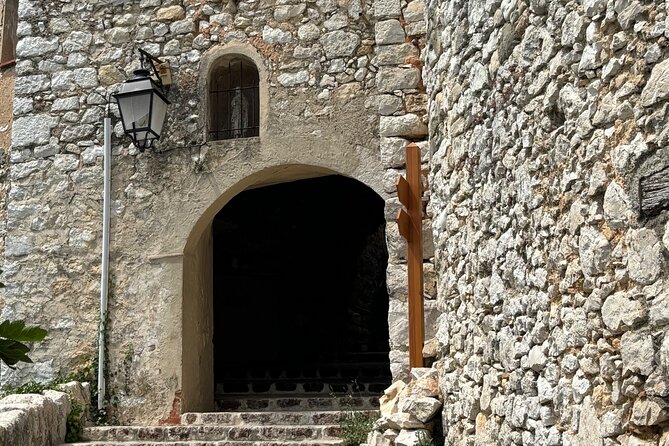
Most of your day is walking. Bathrooms are available in the villages, but there can be crowding, so I’d follow a simple rule: keep an emergency stash of basics (like tissues) just in case. Someone also noted that toilets can run short when bigger groups arrive.
Lunch won’t be provided, but that’s not a dealbreaker here. The villages give you lots of options, and since the itinerary includes free time within each stop, you can choose where you want to sit rather than eat whatever is easiest.
And quick note on tickets: the tour uses a mobile ticket, which is convenient if you’re traveling light.
Should You Book This Medieval Villages and Perfume Tour?
Book it if you want a well-structured day from Nice that mixes medieval village walking with a genuinely meaningful stop at a major perfume factory. This is also a good choice if you enjoy history that you can see in place—ramparts, chapels, church interiors, and old town street patterns.
Skip it if your top priority is hands-on entry into big castle interiors everywhere. This itinerary focuses more on guided explanations plus village strolling and key monuments, not on guaranteed palace-style inside visits at every stop.
If you’re traveling with limited time and want maximum variety—perfume craft in Grasse, defense-and-view Gourdon, violet culture in Tourrettes-sur-Loup, then the art-and-medieval vibe of St-Paul-de-Vence—this is a strong fit.
FAQ
What time does the tour start, and how long is it?
It starts at 9:00am and runs about 8 hours.
Where are pick-ups and drop-offs done?
For shared tours, pick-ups and drop-offs are only done in Nice. The tour ends back at the meeting point.
What’s included in the price?
The tour includes pick-up and drop-off, a guide, the excursion, and an air-conditioned vehicle.
Is lunch or drinks included?
No. Lunch is not included, and bottled water and coffee and/or tea are also not included.
Is the tour offered in English?
Yes. The tour is offered in English.
What should I bring for the villages?
Plan on comfortable shoes and a camera. It’s also smart to have small personal items on hand, since village facilities can get busy.