REVIEW · NICE
The Grand Canyon of Europe and Its Lavender Fields Small group
Book on Viator →Operated by Riviera Star Tours · Bookable on Viator
Provence delivers a canyon day with lavender payoff. This Nice-to-Verdon excursion stitches together huge views, a couple of classic Provençal stops, and seasonal lavender fields when conditions cooperate. Two things I really like about it are the punchy first stop at the Cascades du Saut du Loup waterfalls and the way the day is paced with multiple photo and village breaks, not nonstop highway monotony.
The main drawback is simple: you spend a lot of time in the van on winding mountain roads, and motion sickness can be real. Also, lavender is weather- and timing-dependent, so if you go outside the typical bloom window, you may only catch a patchy look—or none.
In This Review
- Key Highlights at a Glance
- Nice Morning Start: What the Drive Really Means for Your Day
- Waterfalls First: Cascades du Saut du Loup (And Why It’s a Great Warm-Up)
- Castellane and the Rock Above It: A Small Town Stop That Adds Character
- Gorges du Verdon: The French Grand Canyon Moment
- The Lake Sainte-Croix Stop: Swimming Time, or Just a Pretty Break
- Moustiers-Sainte-Marie: Medieval Streets and Ceramic Heritage
- Valensole Lavender: When Purple Shows Up (and When It Doesn’t)
- Waterfall, Canyon, Lavender, Repeat: How the Stops Add Up
- Price and Value: Is $167.74 a Fair Deal?
- Choosing Your Best Moment: Who This Tour Suits
- Should You Book the Grand Canyon of Europe and Lavender Fields Tour?
- FAQ
- How long is the Grand Canyon of Europe and Lavender Fields tour from Nice?
- Is hotel pickup included, and where does pickup happen?
- What are the main sights you’ll visit during the day?
- Is lunch included?
- When do the lavender fields bloom on this tour?
- Does the tour run in all weather?
Key Highlights at a Glance
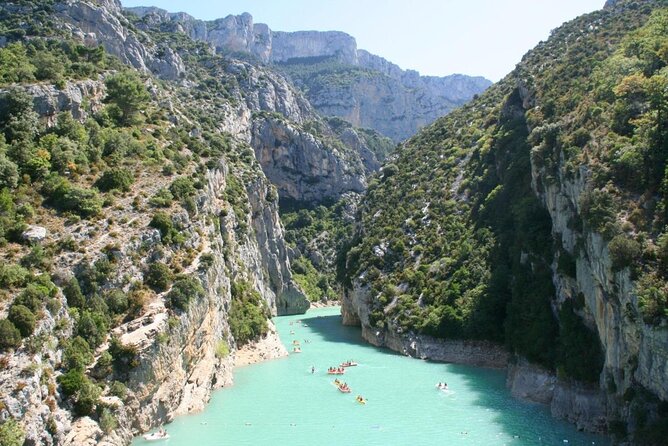
- Grand canyon-level viewpoints over the Verdon Gorge, including a classic Lake Sainte-Croix overlook
- Waterfalls included at Cascades du Saut du Loup, with emerald pools and easy photo access
- Castellane stop under a dramatic 180-meter rock, plus time to stretch your legs
- Moustiers-Sainte-Marie medieval streets and famous ceramic heritage, with real time for lunch
- Valensole Plateau lavender stops at La Maison du Lavandin and Lavande Angelvin (season permitting)
- Optional lake time at Lac de Sainte-Croix, depending on weather and what the group needs
Nice Morning Start: What the Drive Really Means for Your Day
Your day begins in the morning with pickup from your Nice hotel or address. From there, you head inland toward Provence, and yes, you’ll be in a vehicle for a good chunk of the day. That sounds like a downside until you realize what it buys you: you don’t have to plan routes, juggle parking, or connect separate tickets to hit the biggest “wow” spots around the Verdon area.
The upside is that the drive is part sightseeing. You’ll see the scenery shift as you climb into the southern French countryside, and you get short breaks that reset your legs and your brain. One review note that comes up again and again is how the best day trips are the ones that balance driving with timely stops—this itinerary is set up for exactly that.
If you’re sensitive to curvy roads, plan smart. Pack motion-sickness helpers, and sit where you feel steadier (front seats usually help). Even with that, understand this is a mountain road day, not a gentle coastal stroll.
You can also read our reviews of more tours and experiences in Nice.


Waterfalls First: Cascades du Saut du Loup (And Why It’s a Great Warm-Up)
Cascades du Saut du Loup is a strong early choice because it snaps you from Nice-speed reality into “wow mode.” You get a visit time built around quick photos and a short look at the falls and their emerald pools. The entrance is included, so you’re not doing last-minute ticket math while you’re already excited.
This stop also works well as a warm-up for the bigger canyon moment later. It’s still nature and still dramatic, but it’s easier on timing and easier on your body than hiking-style sightseeing. You can take your camera out, get a few angles, and move on without losing half your day.
Practical tip: bring shoes you can trust on uneven ground near viewpoints. It’s outdoors, and weather can change quickly in this part of France.
Castellane and the Rock Above It: A Small Town Stop That Adds Character
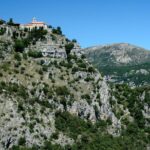
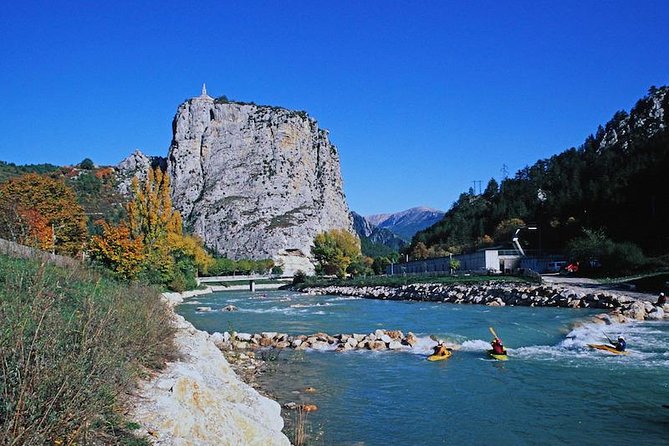
Castellane is the kind of village stop that makes the day feel more human. You get free time (about 45 minutes) in a town set at the gates of the Verdon Gorges. The main visual hook here is the towering rock above the village—reported at 180 meters—with a church perched near the top.
I like this stop because it’s not just “walk for 30 minutes and move along.” It’s long enough to grab a coffee, look around, and soak in the old-town feel. Plus, Castellane is positioned so the canyon scenery stays in your head while you transition to the big-view zones.
If you care about food, this is one of the best places to follow your nose. People often find simple pastries and local bites here that feel much more Provençal than the fast-food option back in Nice.
Gorges du Verdon: The French Grand Canyon Moment
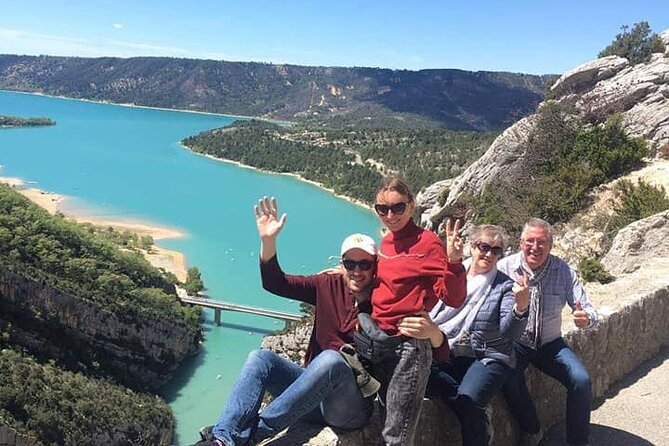
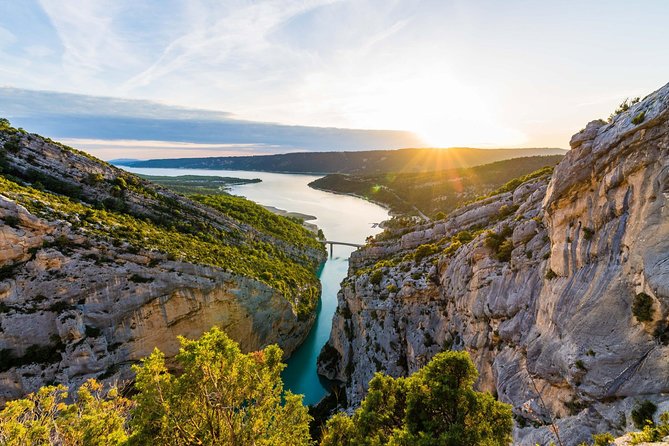
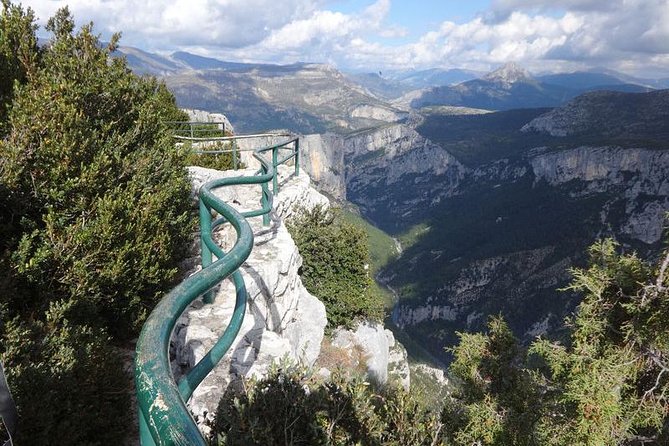
Then comes the headline act: the Verdon Gorge. You’ll follow the river (famous for that turquoise-green look) into a canyon environment that’s often described as one of the most beautiful in Europe. The plan includes scenic stops where you’re taken to viewpoints over the depths—up to roughly 700 meters in depth in the general area you’re seeing.
One of the biggest strengths of this tour is that it doesn’t treat the canyon like a single look-and-leave photo stop. You get time at an overlook point tied to Lake Sainte-Croix, and you also get time for another canyon viewpoint/photo opportunity later in the drive.
Here’s what matters for you: those viewpoints are the difference between seeing Verdon as a name on a map and seeing Verdon as a place. The gorge is huge, and it’s easy to underestimate it until you’re looking down and realizing how far the river sits below.
Timing note: the canyon day is built around scenic driving plus brief stops. If you want long hikes, you’ll need a different style of tour. But if you want the big views with manageable effort, this format makes sense.
The Lake Sainte-Croix Stop: Swimming Time, or Just a Pretty Break
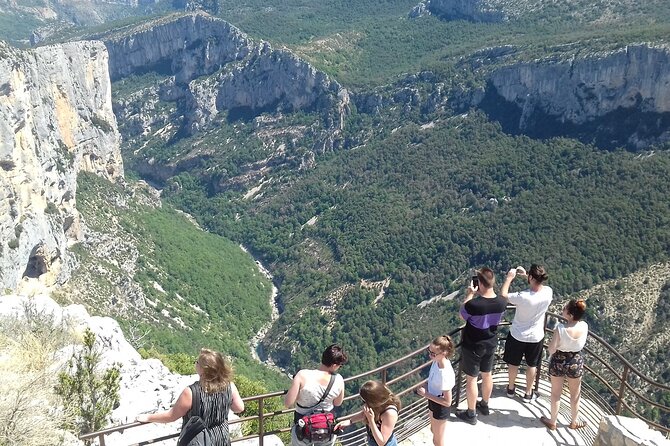
Lac de Sainte-Croix is your “exhale” moment. Depending on weather and the group’s choices, your driver/guide may give you free time at the lakeside instead of extra time in Moustiers. Either way, you’re in the same general region, with the lake offering a calmer, brighter contrast to the canyon’s steep cliffs.
If conditions are good, this is where you can turn the stop into more than photos. Some guides and itineraries in this area have been known to allow extra time for water activities like kayaking or pedal boating, and the water can look clear enough to tempt a swim. Even if you don’t get in, you’ll probably enjoy the simple act of sitting by the shoreline, looking at the view, and letting the day slow down.
If you get car-sick easily, remember that you can sometimes feel better once you’re off the driving loop and standing still. This stop can be a lifesaver for people who struggle with motion on curvy roads.



Moustiers-Sainte-Marie: Medieval Streets and Ceramic Heritage
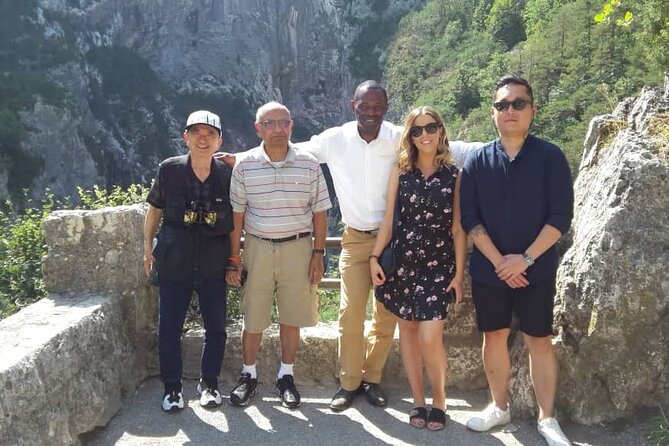
After the gorge, you’ll head to Moustiers-Sainte-Marie, one of the prettiest medieval villages in France. You get around two hours here, which is the right amount of time to do more than the “quick glance.” The village is known for ceramic craftsmanship, so even if you don’t shop, you’re in the kind of place where the craft explains the town’s identity.
This is also where you’ll take lunch on your own. You’ll want to plan your time—two hours can vanish fast if you both browse shops and decide you need a leisurely meal. I’d aim to do one main loop through the village first, then pick a spot for lunch with a view or a central street.
One fun detail that people notice: there’s a star motif associated with the town, and it gives you a memorable landmark to look for while you walk.
Good shoes help again here. Cobblestones don’t care about your timetable.
Valensole Lavender: When Purple Shows Up (and When It Doesn’t)
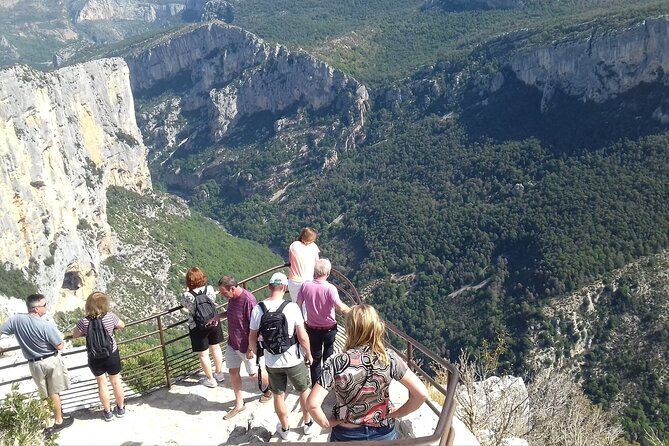
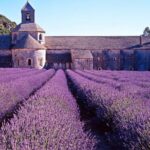
Now the big question: will the lavender be blooming? The tour is designed for the Valensole Plateau lavender season, typically from the end of June until the end of July (weather can shift what’s blooming and what’s already been cut). You’ll stop at two lavender stops to admire the fields and the flowers—La Maison du Lavandin and Lavande Angelvin.
This is the part where you should manage expectations. If lavender is harvested early or blooming is weak that year, you may not get that full “purple waves” look people imagine. The tour is still worth it for the canyon and villages, but if lavender is your top priority, you need to travel in-season and be flexible.
What I like about having two lavender stops instead of only one is that you’re more likely to catch something pretty even if one field is patchier than expected. It also gives you a backup photo opportunity if you arrive and the best views are already fading.
If you’re visiting outside peak bloom, consider switching your mindset: treat lavender as a bonus, not the entire goal.
Waterfall, Canyon, Lavender, Repeat: How the Stops Add Up
This tour works because it stacks different “types” of scenery:
- Waterfalls for a quick jolt of beauty
- Gorge viewpoints for scale and drama
- Medieval villages for atmosphere and breaks
- Lavender fields for color, scent, and that iconic Provence feel
- Lake time for downtime and optional water fun
The catch is that the whole experience runs about 10 hours. That’s a long day, and it only feels comfortable if you embrace the structure: you’re not doing a slow museum crawl. You’re doing an efficient sightseeing circuit with real scenic stops.
Also, mountain roads can be tiring, even if the stops are frequent. If you’re prone to motion sickness, plan for it like it’s part of the itinerary. One good approach: hydrate, eat a light breakfast, and keep your eyes on the road if you can. If you get nauseous, don’t tough it out—tell your driver/guide. This is the type of trip where adjustments can help.
Price and Value: Is $167.74 a Fair Deal?
At about $167.74 per person for a roughly 10-hour outing, the value depends on what you want most.
You’re paying for:
- Round-trip transportation from Nice in an air-conditioned minivan
- A professional driver/guide for the full day
- Pickup and drop-off at your Nice address or accommodation
- Entrance included for the Cascades du Saut du Loup
You’re not paying for:
- Lunch and drinks (you’ll cover those on your own)
Here’s how I think about the value. If you try to replicate this alone, you’ll quickly spend time and money on getting to the Verdon area, figuring out where to stop, and booking separate entry points. You’re also buying convenience: the day is structured so you don’t waste your time searching.
The one scenario where the price can feel high is when your priorities are very narrow—like expecting full lavender bloom every time. The tour is transparent about seasonal timing for lavender, and weather can affect bloom. If you show up during a weaker year, you’ll still have the canyon and villages, but you’ll feel the disappointment more strongly.
Choosing Your Best Moment: Who This Tour Suits
This fits you if:
- You want a big nature day without driving yourself
- You love scenic viewpoints and short photo windows
- You’ll enjoy medieval towns like Castellane and Moustiers
- Lavender is a major reason for the trip, and you plan around late June through late July
You might want to think twice if:
- Lavender bloom is your only reason for going
- You’re very sensitive to curvy mountain roads and long van time
- You want lots of independent wandering or long hikes inside the canyon
Solo travelers often do well on this format because you get structure and safety in a single loop. And small-group dynamics generally mean you can actually ask questions and get real attention.
Should You Book the Grand Canyon of Europe and Lavender Fields Tour?
Yes, with one big condition: book it for the right season and with the right expectations.
If you’re traveling during the end of June to end of July window, you’ll likely get the lavender stops as intended, and the day feels like a greatest-hits Provençal day: waterfalls, the Verdon Gorge, medieval villages, and lake time. If lavender is patchy that year, don’t panic—you’ll still have the canyon views doing the heavy lifting.
I’d recommend booking this tour if you want maximum scenery per day with minimal planning. If you want a guarantee of lavender “perfect purple,” you’ll need a more flexible approach—or a different kind of private planning. In this one, the canyon and towns are the dependable stars.
FAQ
How long is the Grand Canyon of Europe and Lavender Fields tour from Nice?
It runs for about 10 hours (approx.), starting at 8:00 am and returning you to your Nice hotel.
Is hotel pickup included, and where does pickup happen?
Yes. Pickup is offered from your Nice hotel, accommodation, or the address of your choice in Nice. The tour starts at 8:00 am.
What are the main sights you’ll visit during the day?
You’ll see Cascades du Saut du Loup waterfalls, Castellane, viewpoints in and around Gorges du Verdon (including an overlook at Lake Sainte-Croix), Moustiers-Sainte-Marie, and lavender fields on the Valensole Plateau.
Is lunch included?
No. Lunch and drinks are not included, so you’ll buy your own meal during the day.
When do the lavender fields bloom on this tour?
Lavender season is generally from the end of June to the end of July, depending on weather conditions.
Does the tour run in all weather?
The experience requires good weather. If it’s canceled due to poor weather, you’ll be offered another date or a full refund.